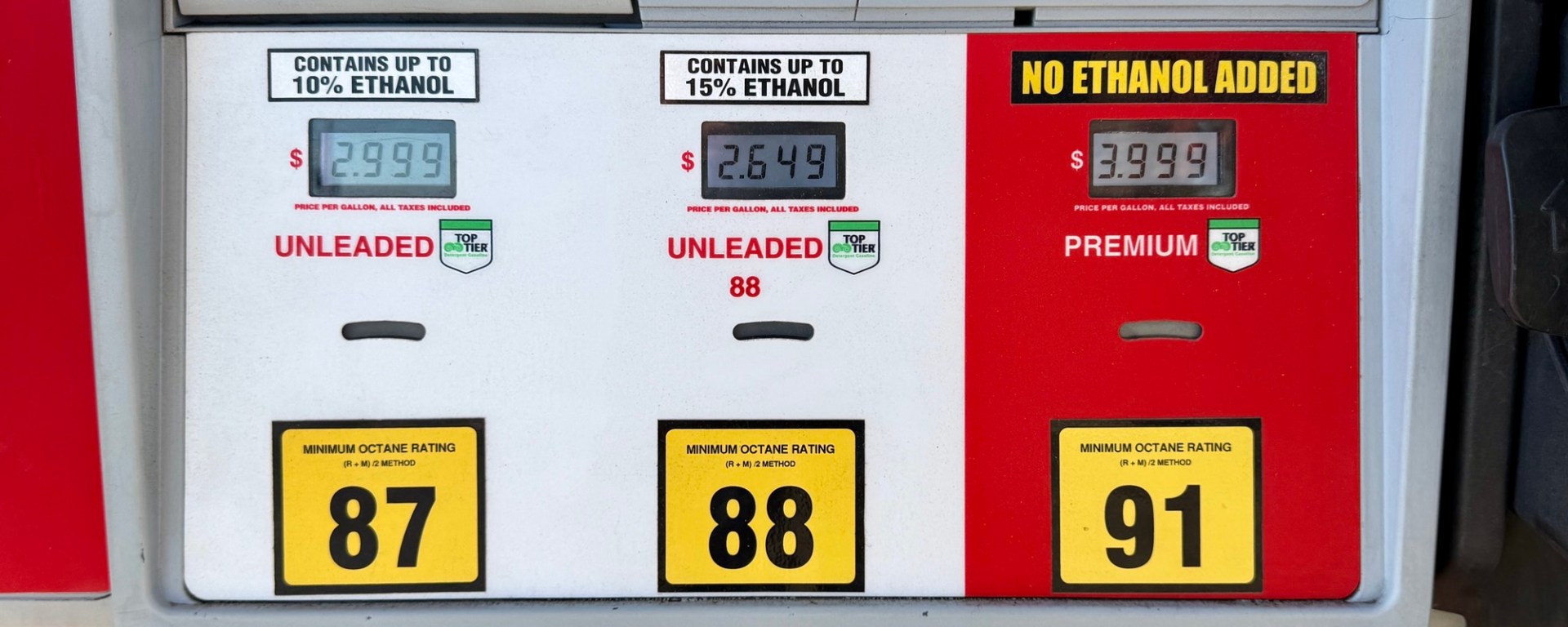
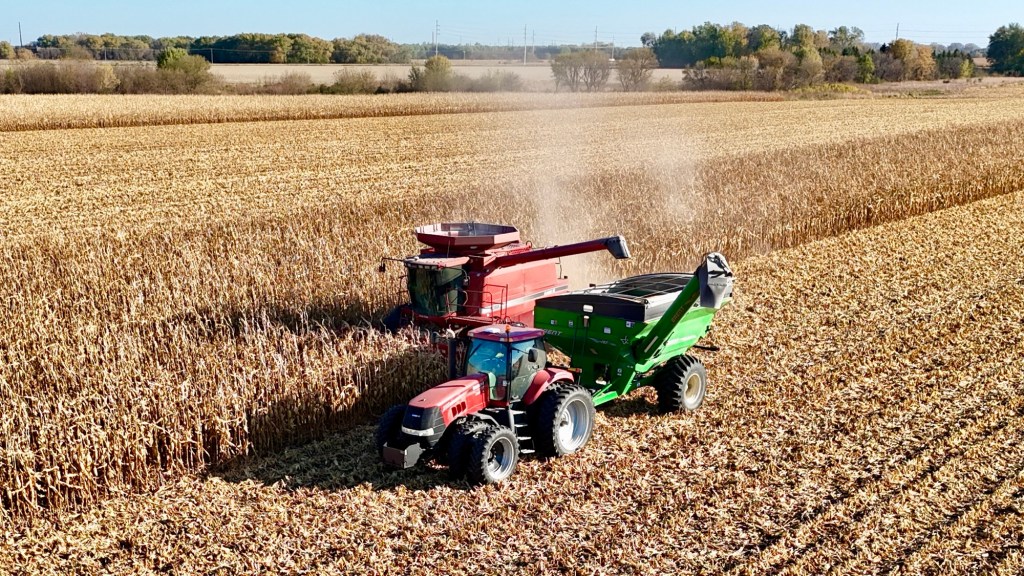
A couple of weeks ago, I had the chance to tag-along with a farmer friend, Andy, during his corn harvest. It was a beautiful October day and I took the above picture with my drone.
The crew of 3 knocked out about 50 acres on that a single day – roughly 500,000 pounds of corn. Most of that corn, he told me, will eventually make its way to an ethanol plant. I had to admit that, even though I’m a car guy, I didn’t really know much about the benefits or drawbacks of ethanol in fuel.
That conversation got me curious enough to do some digging — and eventually, some experimenting. I decided to start filling my Jeep with E15, gasoline blended with 15% ethanol, to see what it was all about.
The first thing I noticed was the price: it’s consistently cheaper per gallon than regular gas. Plus, ethanol burns cleaner, cutting down on emissions, and its higher octane rating gives the engine a little extra “pop” that feels good when you hit the throttle.
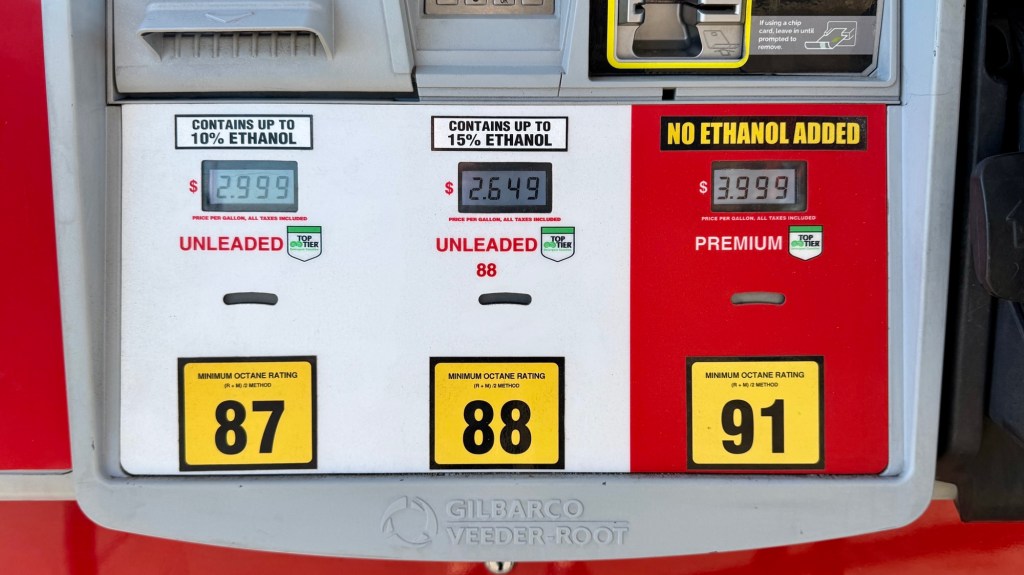
The one downside you often hear about is slightly lower gas mileage, but in my Jeep’s case, I haven’t really noticed it. The performance feels the same, and the savings at the pump are real. I’ve been through two tankfuls with the same 22 miles per gallon.
When I park the Jeep for the winter, I’ll switch back to regular gasoline so things don’t gum up. That was the one thing Farmer Andy warned me about. Still, for everyday driving, E15 has been a pleasant surprise — a cleaner, cheaper, and more energetic option that ties me right back to those 500,000 pounds of corn we pulled in from the field.
Have you tried ethanol in your vehicles?
Images: (c) MrFireStation.com
 MrFireStation
Almost all gasoline contains around 10% ethanol. Some stations sell E85, and E15 was just allowed in California. Haven’t seen any E15 yet and l pass E15 and E85.
One of the main issues with adding ethanol to gasoline is that it is hygroscopic in that it absorbs water from the atmosphere. Ethanol is also more corrosive and created a lot of problems when first added to gasoline in the early 1980s. It caused rubber fuel lines to rot and attacked the incompatible metals, plastics and gaskets in carburetors that weren’t designed for the fuel.
Small engines is another situation that needs to be managed. I use expensive ethanol free fuel in my two cycle chainsaw and line trimmer. My commercial mower has a shut-off valve on the fuel line that allows me to shut off the fuel and allow the engine to run until the carburetor totally runs out of gas in the fuel bowl. I also use fuel stabilizer in my mower and drain it every winter. Before following these practices, I was constantly rebuilding small engine carburetors.
LikeLiked by 1 person
Our stations in MN all offer ethanol free & E10. I was surprised that E15 was 35¢ per gallon cheaper. I’m going to keep using it.
I get you on the water / corrosive aspects. Farmer Andy – who is equal parts economist & chemist – said that as long as you are burning it up, there shouldn’t be a problem. You don’t want to leave it in a vehicle that’s going to sit for awhile though.
LikeLiked by 1 person
Farmer Andy knows his gasoline. I would love to buy ethanol free premium gasoline for $3.99 a gallon. I pay several times that for my small engine fuel.
So I need to run an extension cord from MN to get my electricity and a hose to get my ethanol free fuel. The ethanol free fuel would be the way to go with your vehicles when you fill them up for winters. This must be recognition that people have cars that only come out when the weather is good.
LikeLiked by 1 person
Yep. When we leave them for awhile, we put in the ethanol free 93 and fill’em to the brim so to minimize the air in the tank. I don’t know the science / mechanics of it all, but that’s what all the “car guys” do.
LikeLike