

As Batman learned in the Dark Knight, “You either die the Hero, or you live long enough to become the Villain.”
I think that famous movie line now has some relevance to those of us who played by the rules, worked smart, saved prodigiously, and invested effectively. At first, one’s journey to FIRE (Financial Independence & Retired Early) is hailed by society as successful & admirable. Later, as new problems emerge, one’s lifestyle becomes criticized as selfish & unfair to the others still working.
I see this switch from ‘Hero’ to ‘Villain’ happening in the new derisive concept of “Total Boomer Luxury Communism”.
What is that you say? That’s the mocking progressive catch-phrase accompanying a growing political debate about the financial sustainability of Social Security & Medicare at the same time that America’s Boomer generation has seen their share of wealth grow markedly. It’s an intergenerational fight – that if you haven’t heard it yet – will undoubtedly grow as the US debt grows under the weight of entitlement spending.
Recently, I saw these some relevant charts posted online that outline the issues …
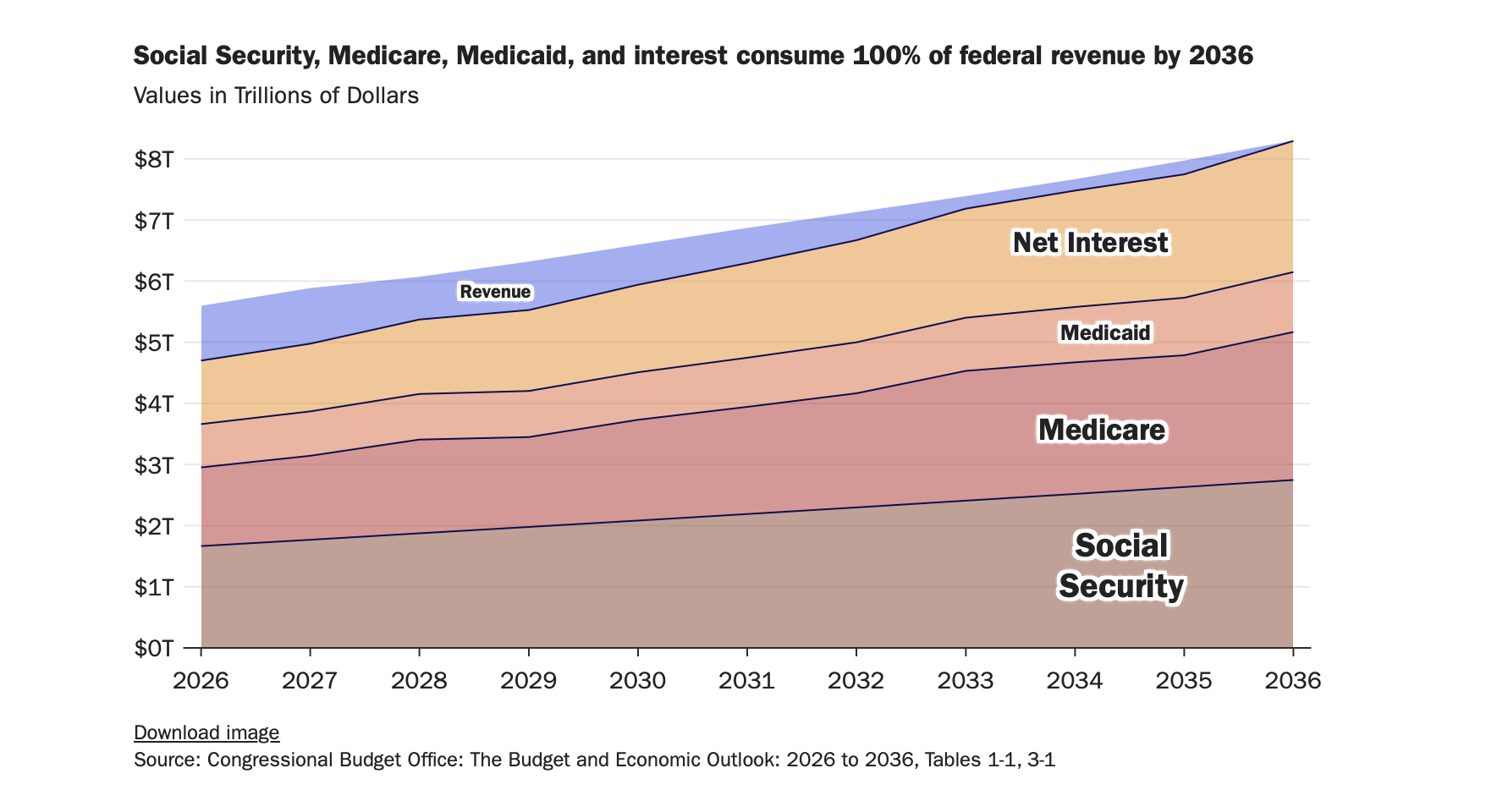
This first one shows that the government’s deficit spending is approaching a breaking point, with Social Security, Medicare, and Medicaid growing dramatically and ballooning our interest payments. Once they reach the blue area, there is no money left for any other spending (military, healthcare, education, transportation, affordable housing, national parks – pick your voter’s favorite spending category) without having all of it be completely debt-financed.
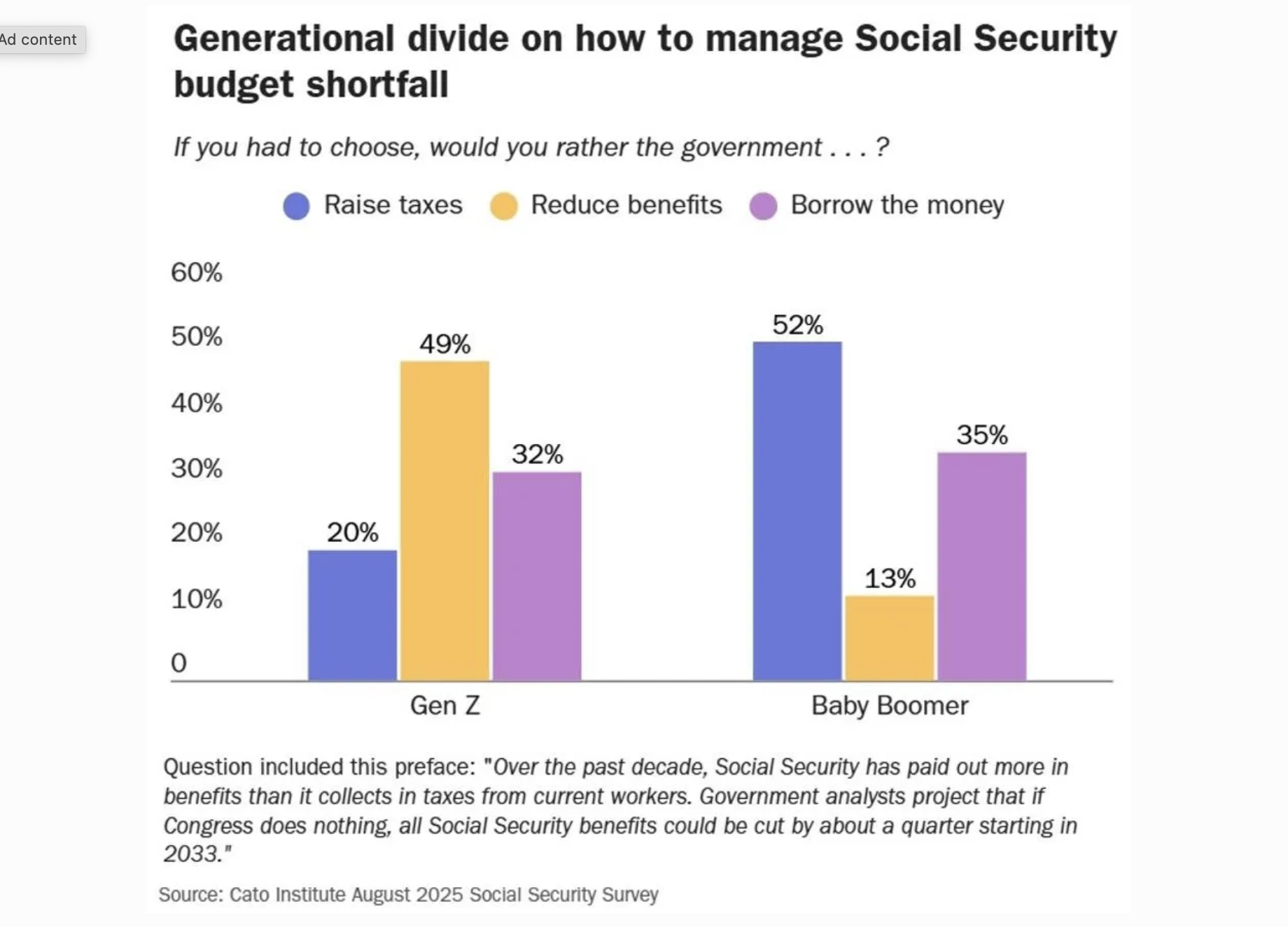
How should this dilemma be solved? As you can imagine, younger people (payroll taxpayers) and seniors (benefit beneficiaries) have quite different ideas on how to sustain the programs. Most young people want to cut benefits and seniors want to increase payroll taxes. A third of both groups seem to be fine with continuing to borrow money, although that’s what has got us into this unsustainable predicament!
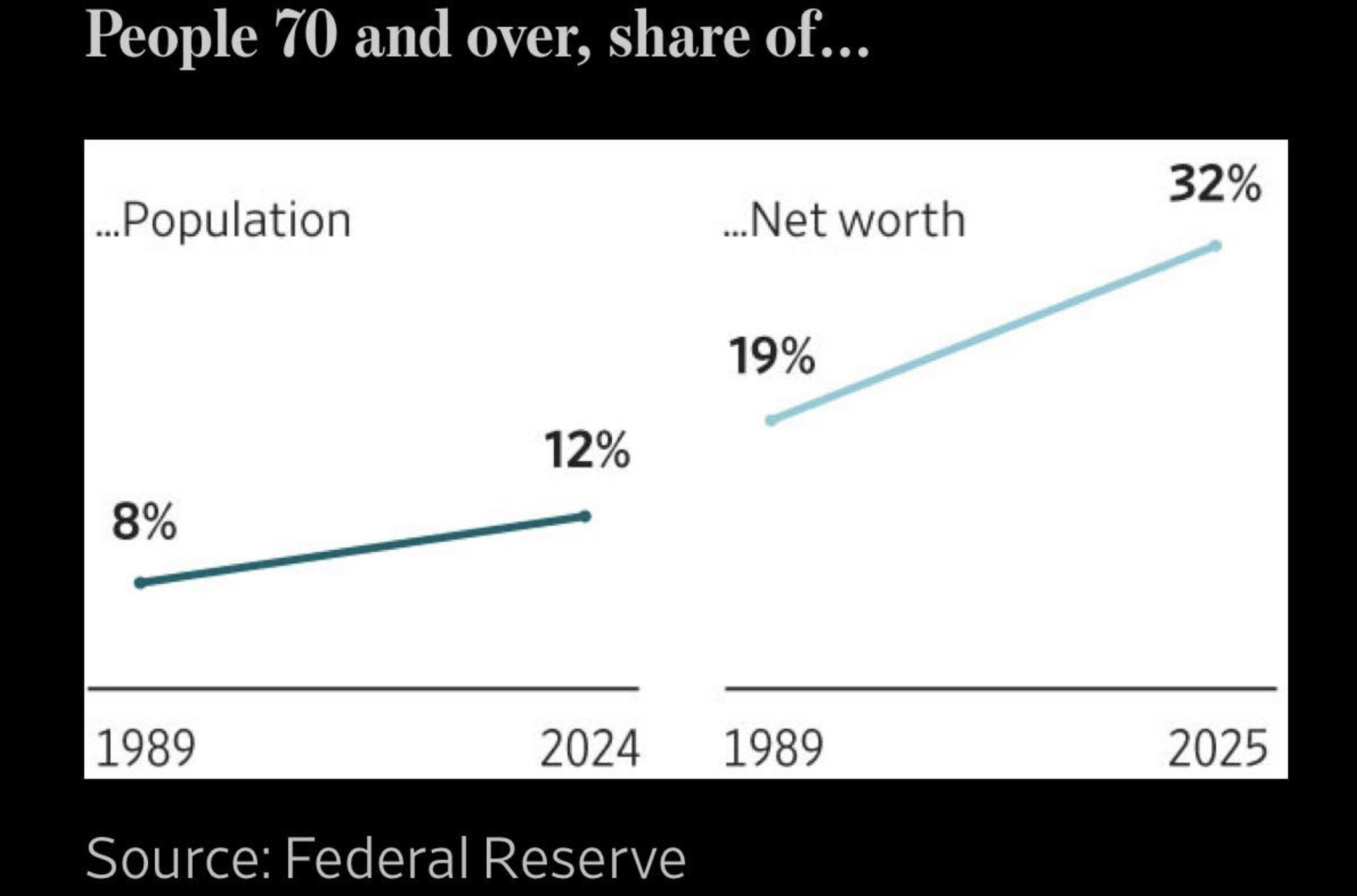
At the same time, many feel that less and less seniors have a need for these programs as they are now commanding a historically huge share of wealth. The ratio of tax paying workers to senior beneficiaries was 8.6 workers per beneficiary in 1955 to 2.8 today. At the same time, seniors have seen their ownership of wealth grow dramatically over the last few decades – now about 3x their share of population.
Looking into that data, you can imagine the upcoming stories that will contrast indulgent Boomer lifestyles with hard-working younger people “who can’t get ahead”. They’ll show seniors driving their luxury cars (poorly), obesely lounging in the sun on exotic international trips, and hypocritically indulging their grandchildren. Critics will point out the irony that these same grandchildren are the future workforce that will be needed to slave at their jobs to support the largesse going to the seniors.
Importantly, I want to note that research shows that most young people are doing just fine financially. I’ve written about this many times in the past, including HERE, HERE and HERE. This chart shows that in real dollars (adjusted for inflation), they are generating more income than every generation that has come before them.
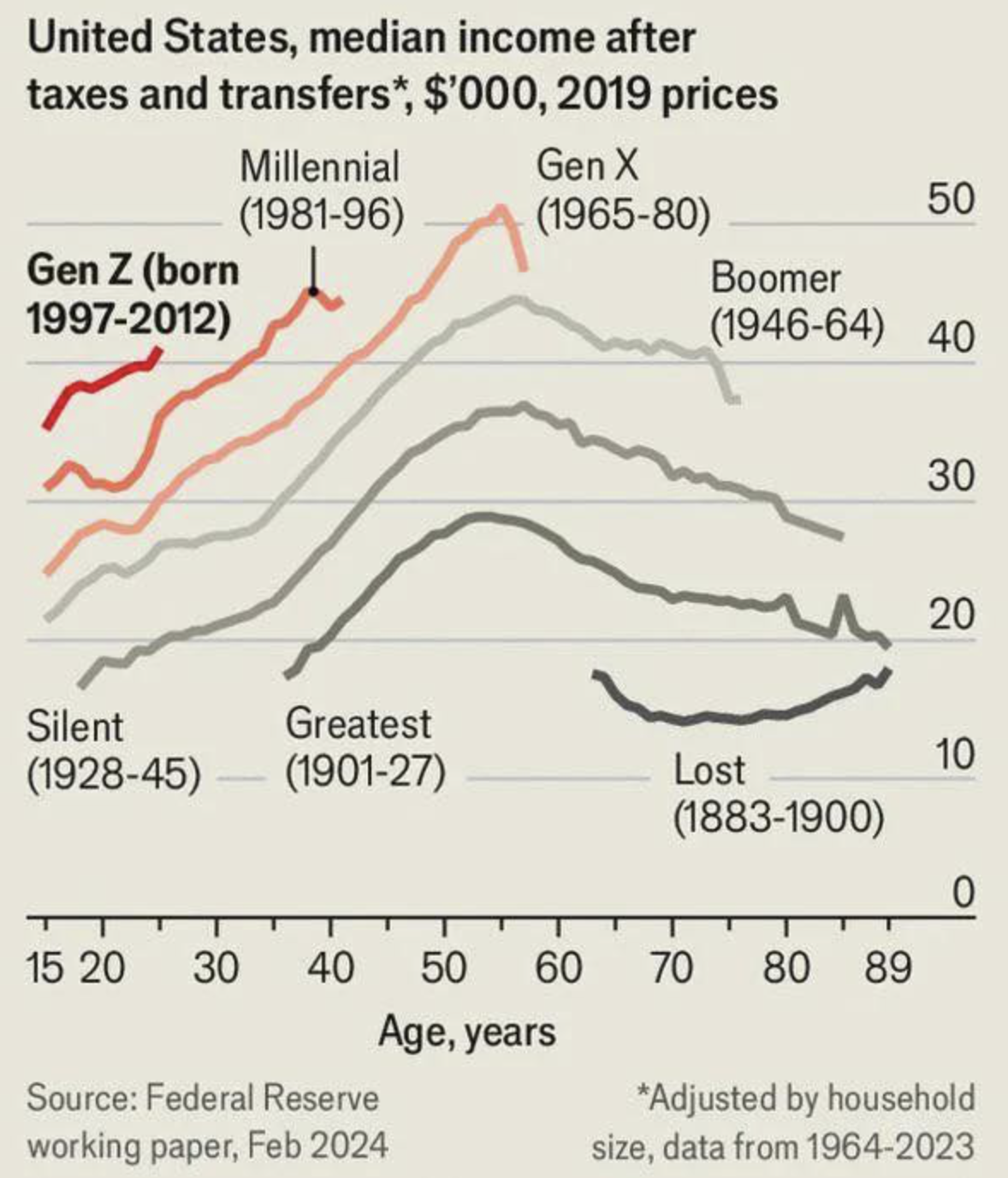
I’ll note that the pattern of this chart is true for young people across ALL demographics in the original Federal Reserve study (LINK). That includes all levels of education, all races, and even by age splits within the “generational groupings”. Still, that will not stop politicians from framing any financial problems (as we saw with Biden’s dubious plan to erase student loan debt) as an opportunities for government solutions.
In conclusion, get ready for an inter-generational fight like we haven’t seen since the Boomers themselves said “don’t trust anyone over 30”. Clearly Social Security and Medicare are going to require significant reform over the next 10 years. The arguments about “Total Boomer Luxury Communism” are going to gain purchase and be used as an activist argument for changing the balance between the payees and the beneficiaries.
My guess is that current benefits will be grandfathered in for those that are already drawing them, or fully-vested in them. Future benefits may be curtailed, payroll taxes immediately increased, and means-testing put into place, but ironically, the people that will end up paying the most and getting less in return are those that are working age now.
How much of a political food-fight do you think this will be between generations? Are you prepared to be the Villain?
Image: Pixabay; Charts: Cato Institute, Wall Street Journal, Financial Times
 MrFireStation