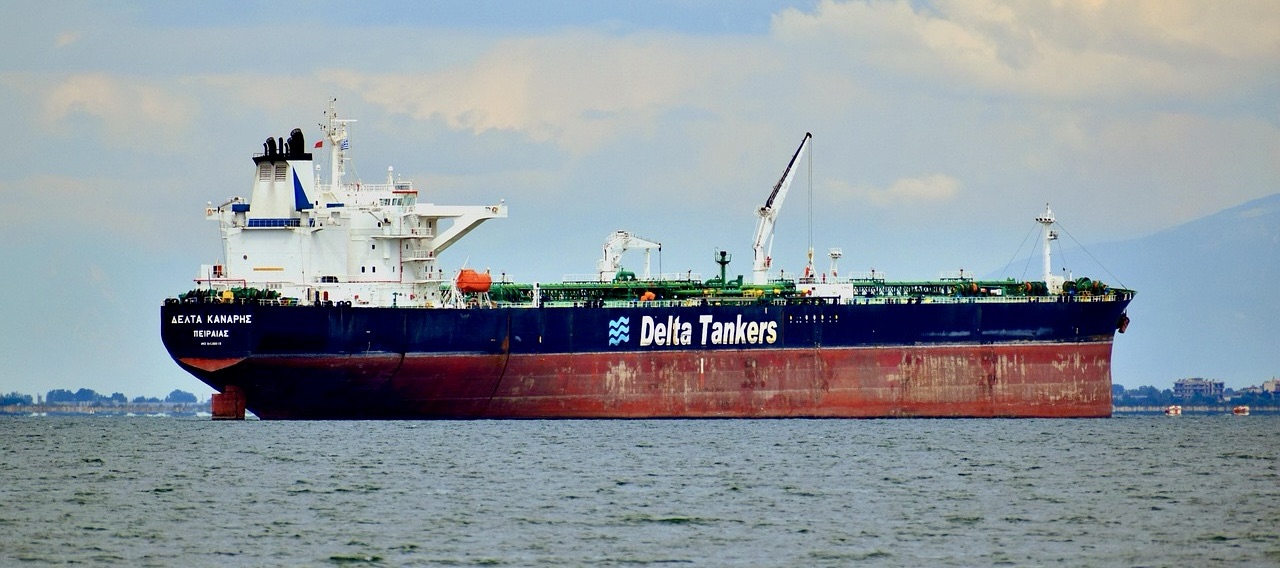
Since I don’t work, I probably follow the news more than the average bear. When you do that, you start to think you know more than most other people.
Violating one of my own guidelines to buy index funds for the long-term and not play individual investments for the short-term, I bought $5K of the oil fund BNO a few weeks ago.
Every few days Trump was saying we had a deal with Iran to open the Strait of Hormuz, and the oil prices would drop. Then there wasn’t a deal and the price would spike when he’d threaten to bomb them more. It happened like two dozen times. Until I joined the game.
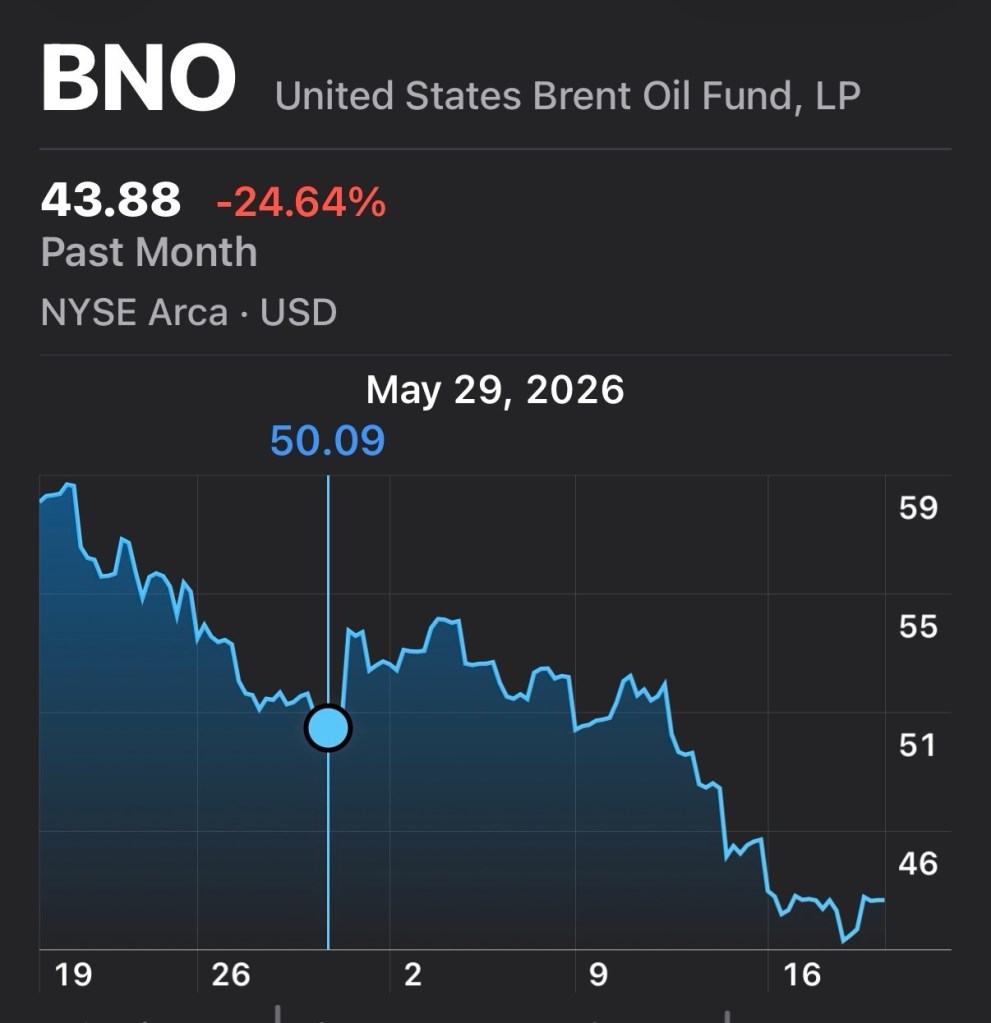
At that point, oil went down and stayed down. More & more ships started moving through the Strait of Hormuz. According to the US Secretary of Energy, Chris Wright, 72 ships went through in the last 24 hours as I write this. That’s a lot higher than what we’ve seen for quite awhile.
I only planned on keeping the oil shares for a week or so. I could have sold for a little profit if I had done that. Instead, I lost $619. I reinvested the balance in Google last week.
I’m not disappointed. Not at all. I’m happy they are finding a resolution to the fighting. With the S&P 500 up +7.4% this year, this small oil investment is dust in our overall portfolio.
Have you ever tried to “play the headlines” with investments? What did you learn? I learned I’m a lousy war profiteer … ! 😉
Image; Pixabay; Chart: Apple Stocks


Headlines that cause fear can create value priced stock opportunities. Remember that emotions cause overreaction to good and bad news. Prices of stocks are bid higher on good news and lower on bad news. Dividend stock screening identifies steady stocks that are growing their dividends and are selling at low prices that provide high current yields that are often at a five year high. These stocks also often have a bit of bad news that caused emotional investors to panic and sell.
Here are four examples.
1) During the 2008 to 2010 timeframe the US had the subprime mortgage meltdown. Home Depot was selling for around $15 and had a dividend yield around 4.5%. Despite the bad news, HD was still raising their dividend over 20% per year.
2) The BiDUMB Administration took adverse actions against the Oil and Gas Industry that was making it difficult for smaller players to compete. Exxon Mobil, ticker symbol XOM was on sale with a 6.5% current yield. Chevron was also had a yield north of 6%.
3) Electric Utilities at the same time as all the AI hoopla were unloved and seen as being an alternative to bonds. Because of my electrical and computer engineering background, I understand that datacenters are electricity hogs. Electric Utilities are the picks and shovel providers to the AI gold miners.
4) The Trump Administrations’ MAHA and most favored nation pricing for pharmaceuticals has created opportunities in the processed food and pharmaceutical industries.
The problem with BNO was that the underlying oil and gas industry had already had a runup in price. I ran a screen today and Chevron and Canadian Natural Resources were the only two names in the industry that are even close selling at an average PE ratio with an average current yield.
Baron Rothschild said something along the lines, “Buy at the sound of cannons. Sell at the sound of victory trumpets.” Another way of stating this, is buy when people are afraid and sell when people are greedy.
LikeLiked by 1 person
Yes – government policy certainly influences the markets. Dividend stocks take some of the volatility out as they are the most stable stocks. I just thought I was buying at the sound of (continuing) cannons, and that Trump’s sound of trumpets was another phony announcement – which he has become well-known for. (I also think the current packaged food stock malaise has more to do with changing demographics & Ozempic than MAHA).
LikeLiked by 1 person
Ozempic is cited by the packaged food companies as a contributor. So is the new upside food pyramid that looks like before the 1970s. I like buying good numbers caused by bad news. Ironically. oil and gas after a reset might be good value.
LikeLiked by 1 person
I played the headlines at the start of the Iraq war in the early 90’s, I guess that is referred to as IRAQ 1.
I recognized that thousands of Marines would be overseas for over 12 months with no ability to spend money. I bought Harley Davidson thinking that young men returning from war want a new motorcycle, especially one made in the USA.
I didn’t have a lot of money but did make a great return albeit selling way too soon.
I was in a meeting with the Housing Authority director of my employer in November 2007. A bond refinance did not go through due to the lack of security. A few months later someone I knew who had retired from the Resolution Trust Corporation told me they asked him to return for a two year big assignment. That was my signal to short the market and also sell my house. I did neither but I am ok with that decision.
That assignment that my friend would be on would include Indy Mac which was an early mortgage firm to go under. Coincidentally I live across the street from the Indy Mac building which has been sold many times since. It is a high grade property.
LikeLiked by 2 people
That seems like a good consumer insight for Harley Davidson. They were really doing well in the 1990s. I recall we had their CMO come to MegaCorp for a lunch & panel. She said, “real brand loyalty is a tattoo of our logo!” I bet they did pretty well during the pandemic, too – although I don’t think the company has been as competitive since.
2007 was just in time to stay ahead of the housing meltdown. It’s funny how when you see something like that starting in your industry that your “Spidey-sense” kicks in that something doesn’t feel quite right. I had the opposite. When the housing crisis happened, I worked at a packaged food MegaCorp – a classic recession-proof, defensive stock. Our MegaCorp was 1 of only five S&P 500 stocks that were UP in 2008. Our stock was way up and we sold a bunch and built a bigger house. One of the two perfectly timed market inflection points we benefited from (the other was the Pandemic 3/17/20).
LikeLiked by 1 person
Thinking back on my decision on Harley, I was channeling Peter Lynch and his story of buy what you know. In the late 70’s his wife and daughters bought Legg pantyhose in the egg-shaped packages which were in all stores at that time. My recollection is that he had Magellan invest in the firm that made Leggs and he hit a home run…one of many
LikeLike
I remember those little eggs! Funny that brand has all but disappeared. I guess nylons aren’t much in fashion anymore, though. What’s great about that example is that it wasn’t a big splashy innovation like ChatGPT or SpaceX. It’s a smaller, less noticed opportunity. I’m trying to think of something like that in my life right now, but I’m drawing a blank.
LikeLike