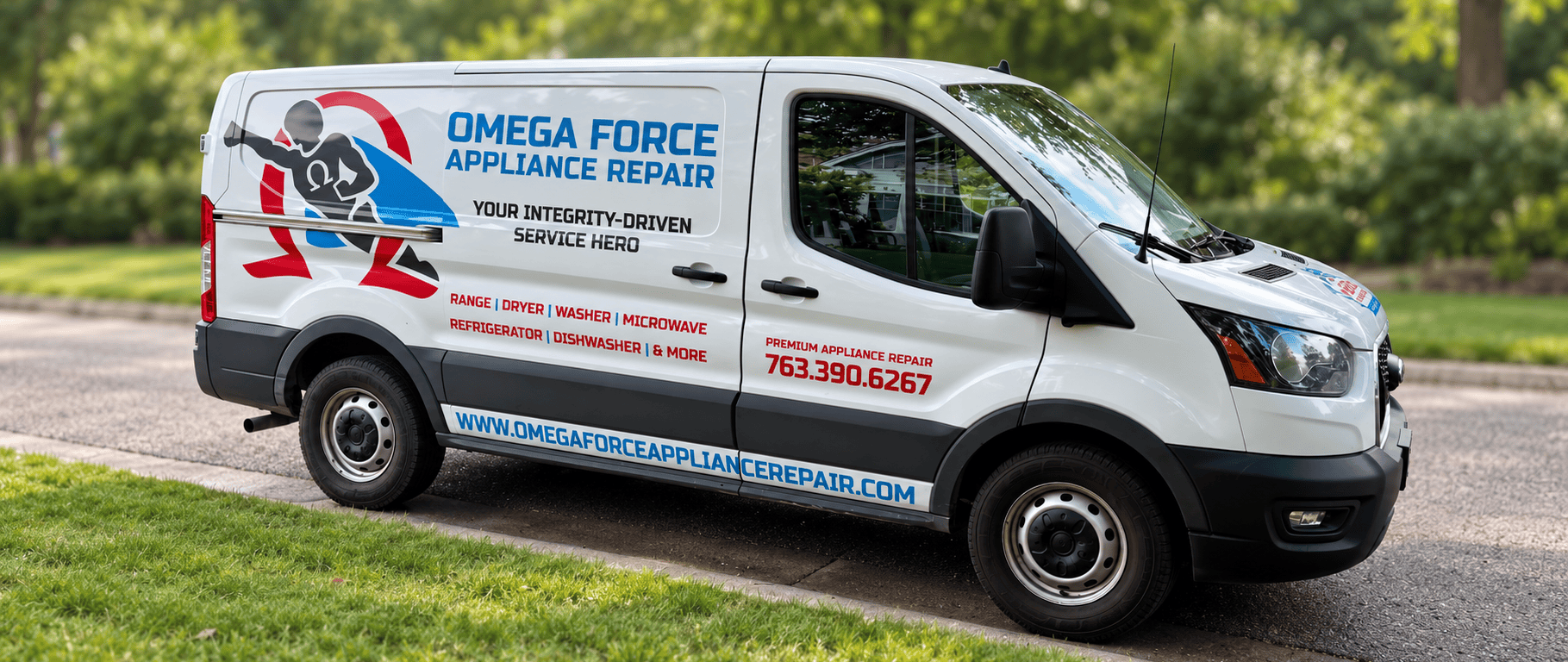
I saw this appliance repair truck in our neighborhood last week and I appreciated how lucky we’ve been with our house. We moved in 17 years ago this Halloween and we haven’t had to call the repair man very often.
I shared the post Is Your House Falling Apart? about seven years ago and we’ve avoided big repairs for the most part since I wrote it. This chart shows in RED what we’ve repaired, and in YELLOW, what we are due to replace.
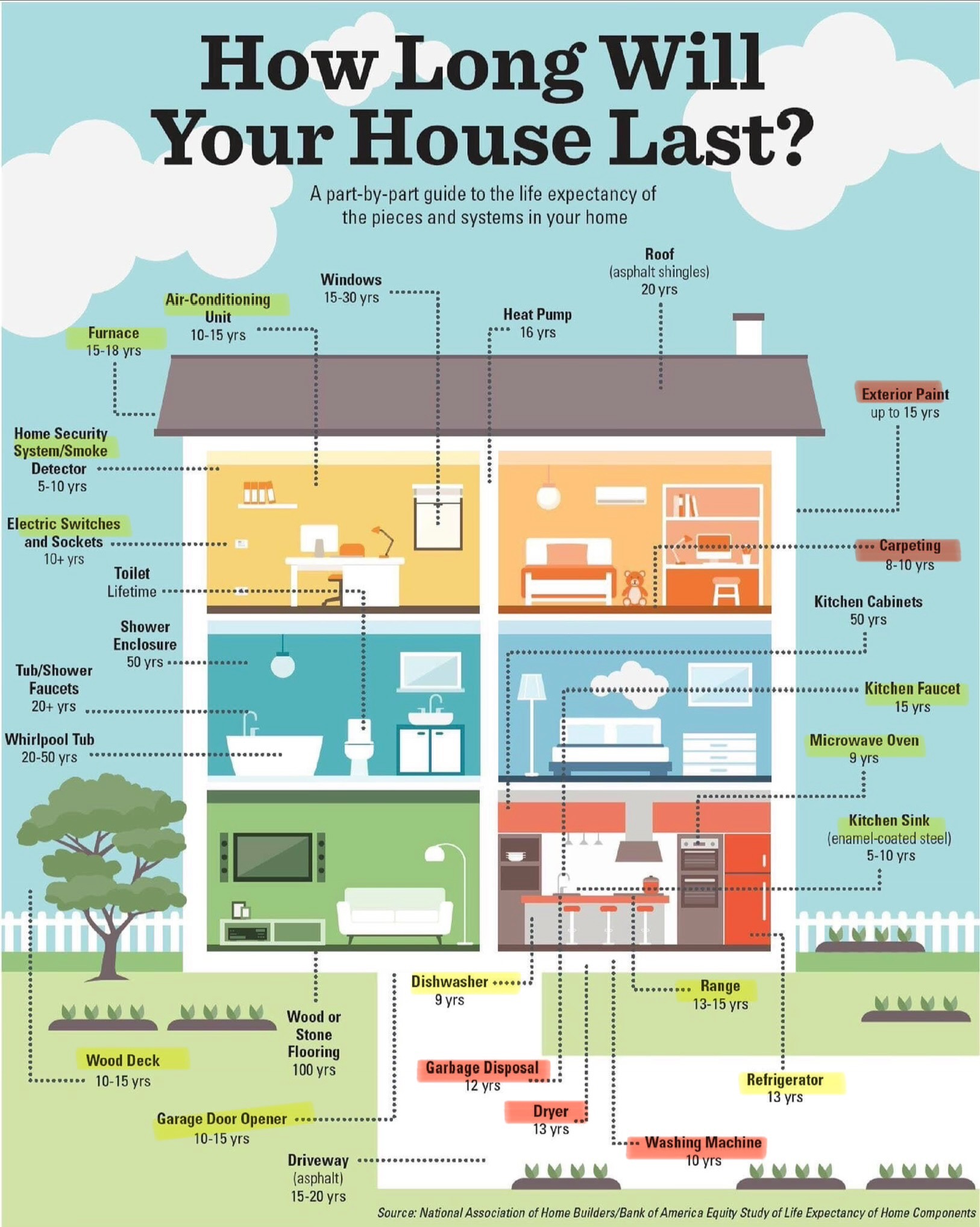
Of all the repairs highlighted in red, I think only our washing machine actually died. We replaced the dryer to match it, and the few other things highlighted were also replaced proactively. We chose new carpet for a few rooms we redecorated, replaced the garbage disposal when we got a new sink that was a different color, and we wanted to get ahead of painting the house before it really needed it.
The most expensive repair we’ve actually had is our roof shingles. I didn’t highlight that, since it was caused by hail and covered fully by insurance. We have 40-year shingles, so they wouldn’t have needed repair if the storm hadn’t come through. The new shingles are “lifetime”.
Our major kitchen appliances … range, oven, microwave, refrigerator, and dishwasher are all original, but also ALL overdue for replacement. We had our oven door break on Easter Sunday once, but that’s the only issue we’ve had. We bought good quality stuff, but it’s really paid off.
How are you doing on home repairs? Are appliances and other critical components of your home lasting as long as they should?
Image: (c) MrFireStation.com


My house is 36 years old. Two years ago, I replaced the heat pump. The newer heat pump is slightly larger capacity, much quieter and almost double the efficiency. My only regret was not doing this upgrade sooner.
A year ago, I redid a walk out deck with new structural and covering wood. 35 years is pretty good for a deck. I also replaced my garage doors. My washer (15 years) and dryer (25 years) were replaced. My networked combination Smoke / CO detectors just hit their ten years expiration. All the switches and receptacles in my house were replaced in 2000 to change color and style. I replaced original skylights with Velux and wish I had changed them sooner.
We remodeled our kitchen in 2000. Only one appliance is original from 1990, a Broan Trash Compactor. I had a piece of stainless-steel cut and installed it on the door to match the other appliances. The only maintenance was changing a main drive gear from nylon to metal after the nylon one failed. I have had to replace two elements on our Bosch halogen cooktop. The Bosch dishwasher got changed about five years ago, so I got around 20 years out of the first one. My Bosch Convection oven is from 2000 with the only repair being a fix on the door not closing tight. I took the unit out clocked the spring closer mechanism to increase the spring tension, drilled new holes and reused the original screws in the new orientation to tighten the doors. My original Badger garage disposal (1990) started leaking after around 25 years and was replaced with another Badger. I have a built-in GE Convection Microwave, and it failed after about nine years. Initially, I thought I could just buy another built-in microwave to replace it but couldn’t find one that fit the cabinet. I have fixed the microwave two or three times by buying the same wattage microwave at Walmart and pulling out the magnetron, diode, capacitor and transformer. They fit perfectly and the repair is around $60 to $70.
I do find myself checking out induction cooktops and Bosch Convection / Air Fryer Ovens.
My septic system was getting marginal after 35 years, so I installed an Aeration Remediation System. The technology was studied by the University of Wisconsin and was recommended for remediating and avoiding problems with septic systems.
My upcoming projects for the fall are refinishing hardwood floors (after 16 years), painting the wood trim on the outside of the house (after 20 years), and replacing two French door thresholds, weatherstripping and install drip pans under them.
My roof is flat concrete tile and is original. I have had to replace a couple tiles when the new skylights were installed and from workers walking improperly on the tiles. Really hard tracking down old stock tiles and still had to trim them slightly. Flat tile roofs can last 75 years in Europe. The problem with long lasting roofs is that homeowners’ insurance companies try to make you replace your roof every 20 years.
I remember one of your readers had a spreadsheet that he uses to accrue for house repairs and maintenance, and it appeared his approach was to be proactive and do the replacement before the system breaks to avoid surprises.
LikeLike
It sounds like you have gotten pretty good service and longevity from the parts of your house. We’ve never bought a house more than 10 years old, until we bought our condo in FL, which was about 20 years old.
Amazing that your trash compactor has lasted the whole time. We’ve never had one of those. That’s funny how you fix your microwaves!
Like you, we’ve had pretty good luck with premium kitchen appliances. Our dishwasher, microwave, and oven are all Bosch. Our cooktop is Jenn-Air, and our fridge is Kitchenaide.
I remember that comment about accruing for repairs. That guy – Thom – owned a bunch of rental properties, so he was pretty on top of it.
That’s the way to think about it – replace before they break, so you are not stuck with an uncooked Thanksgiving turkey in the oven with a lot of people over!
LikeLiked by 1 person
Before putting in my Generac backup whole house generator, SCE used to preventively shut down our electricity for a typical threes days to prevent their lines from starting fires. I swear SCE had a camera on my oven with AI that watched for me putting a turkey in the oven. In 2023, I cooked the turkey on my charcoal grill and it worked out really well. The rest of Thanksgiving Dinner was cooked on an old Coleman gasoline stove. Even brought out the Coleman gasoline lantern.
Now that I have the backup generator, SCE put the wires under the street. So far I have had only three 4 – 8 hour outages this year.
LikeLike
Our condo building was occupied in 2009 and we moved here in 2016. Given the recession when the building was being finished, we note many cost saving shortcuts made in construction. This is both within units and common areas.
We have replaced all appliances, HVAC, washer and dryer. We are in the midst of replacing all angle stop water shut off valves as most are frozen in the on position and were when we moved in. We just had a pipe under the spare bath sink replaced. The drain for HVAC condensate attaches to that pipe and it had corroded through. The sink elbow had extensive corrosion, and this is a sink that isn’t heavily used. Commercial contractors use cheap materials in condo buildings as they will last through the warranty and construction defect statute of limitations periods.
We also replaced original carpet and many light fixtures are now LED.
OI will note like Klaus, our new compressor and heat pump for HVAC is highly efficient with notable decrease in electric bill despite rate increases. Efficiency matters.
We replaced original appliances with higher quality appliances. I am the younger spouse, and I expect to live about 20 years. Will these appliances be the last which I purchase? Probably except for the dishwasher and refrigerator.
LikeLiked by 2 people
A maintenance item you can add to your To-Do list is turning all the ball valves off and on once a quarter. I am on the same water as you and the lime scale freezes ball valves into the On position making them very difficult to turn Off, especially when you need to. Exercising the ball valves breaks the limescale up. Know where your main service entrance turn off is and give it some exercise once a quarter.
Another item to add to scheduled maintenance is replacing the hoses that connect the toilets and faucets once every ten years. Or, redo the connections with soft copper tubing with compression fittings. When they blow out, you end up with a real water mess. Home Owners’ Insurance Companies pay out more for water damage.
I switched all the lights in my house over to LEDs for electricity savings and to avoid climbing up on a ladder to change high bay lighting.
LikeLiked by 1 person
Agree that exercising valves on a regular basis should be a standard practice. Sadly our condo association manager is not up to speed on such practices and two years ago due to challenges with shut off valves for our stacks not being labeled we embarked on the process but it was not followed up on. I am now on the board and this is being done. I am also going to suggest that we exercise all valves….I suspect that we will replace some and that won’t be inexpensive as they are 15 feet above the garage deck.
Years ago when I replumbed my house which had a raised foundation, I installed valves to make separate zones in the house and those shut off valves were located at access holes to the crawl space in closets. When I would do work in a bathroom, I would not need to shut off water for the whole house, but reach into the crawl space and turn off one or two valves, two if both hot and cold water was being worked on.
LikeLiked by 1 person